

VoIP (Voice over IP) includes communication protocols, technologies and techniques of transmission used for multimedia sessions and voice communication via IP networks. Other terms used synonymously with ‘Voice over IP’ include broadband phone, voice over broadband and Internet telephony.
How Does VoIP Work?
VoIP calls require media channel setup, analog voice signal digitalization, encoding, packeting and transmission of IP packets via packet-switched network. On the receiving end, there will also be packet-decoding, conversion of analog signals to digital signals, and IP packets reception.
 VoIP uses audio codecs that encode speech and allow transmission via IP network. Network bandwidth and application requirements will determine which codec will be used. Some implementations use high fidelity stereo codecs, whereas others use compressed speech.
Internet devices can use VoIP, meaning that people who use portable devices other than phones can make calls and send text messages via Wi-Fi or 3G.
VoIP works by converting analog voice calls into data packets that travel via Internet or any other IP network. You can call both cell phones and landlines, or make computer-to-computer calls.
Connecting to a VoIP service provider requires you to have a VoIP phone. You can use a dedicated VoIP phone that is directly connected to the network using wireless Wi-Fi or wired Ethernet. These phones resemble regular digital business phones.
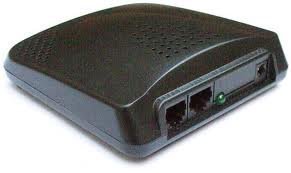
Analog telephone adapters implement the firmware and electronics to operate a regular analog phone attached through a phone jack. Some cable modems come with this function.
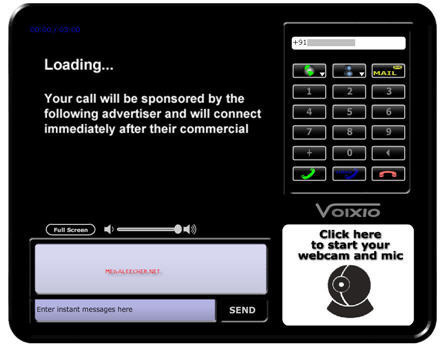
A softphone (VoIP software) is used in computers. This application presents a display field and a dial pad operated by keyboard input or mouse clicks.
VoIP Services
There are several VoIP services to choose from, depending on your needs and method of communication.
Software-based VoIP service is probably the most popular VoIP service. In most cases, this service is free (especially if used for PC-to-PC communication). To use this service, you need to download ‘softphone’, install it on your device and create a free account. The calls are free and unlimited for people who use the same type of VoIP service on their PCs. Landline and mobile calls are not free, but they are still cheap.
Residential VoIP service (or office VoIP service) can replace the ‘regular’ phone line you use in your office or at home. You can sign up for this service online. You will get a phone adapter to plug to the broadband Internet line on one side and to your phone on the other side. Calls to some destinations can be unlimited, or they can be limited to a specific number of minutes, depending on which type of service you choose.
Mobile VoIP service is a good option for people who are trying to cut down their cell phone bills.
No-Monthly Bill is similar to residential VoIP service. You will get a device to use for VoIP communication (just like with residential VoIP service), but there will be no monthly fees. With this service, you will have unlimited calls, but you won’t be getting phone bills every month.
Business VoIP service offers several different packages, depending on the needs of your business. You can use VoIP for both external and internal communication.
Advantages of VoIP
• Low cost is certainly the greatest advantage of using VoIP. Even international calls are inexpensive.
• VoIP users can communicate with each other free of charge, if they use the same type of VoIP service.
• One broadband connection can be used for transmitting several phone calls.
• Infrastructure costs are significantly reduced. You don’t need a separate data and voice network.

Jenny
i got my voip with nomado, so far i am happy with it. i am using it with my pc for now, but they said i can use it with my regular phone..
Zitouni
VoIP cannot be limited to Betamax clones like voipbuster, voipstunt, Skype, lowcallrate etc..
There are companies which are serious and offer quality VoIP. One tip : check on your contry or continent local provider who can port your current telephone number.
Jenny
I would like to use voip because it is cheaper but I am afraid it will not work well compared to my regular line. My friend switched to voip and now they have problems and could not use the phone due to NAT issue. How van I be sure I will not get that problem?
Kasthuri
By using VoIP Technology can we make calls from other’s mobile also??
Giash Uddin
what meant by ASR ?
Giash Uddin
I need to know what are the abbreviation of the following words used in VoIP Technology:
a) ASR ?
b) ACD ?
c) PDD ?
Marlon Franco
ACD – Average Call Duration
PDD – Post Dial Delay
ASR – Answer-Seize Ratio
Giash Uddin
I need to know the abbreviation of the words used in VoIP Technology:
a) ASR
b) ACD
c) PDD
genesis computers limited
genesis computers ltd moshi kilimanjaro tanzania
Anusha
when we conneced the phone to phone adapter what are the methods or technology that is happening inside it ?? can u explain it deeply
khairul
i want to ask one things. Why usually in voice application we use TFTP rather than just use FTP?..TQ..
memenode
TFTP is Trivial File Transfer Protocol, a limited, simpler version of FTP, but also very low on memory usage which I assume makes it useful for VoIP applications which probably don’t need any more than what TFTP provides.
tapash
i need the ppt slide
ThePieMonster
I agree with memenode, VOIP is a brilliant service; it represents the evolution of superior technologies – just as EMail took over from Fax (or at least reduced its use), VOIP will eventually take over once internet based systems gain majority prevalence.
Daniel Memenode
VoIP, or Voice Over IP, is nothing all that fancy. It’s just talking with people live over the internet, that’s all. The purpose of this should then be obvious. It’s cheaper, and you can talk with anyone on the web globally, and even for free. I think Skype is a good example, and you all know Skype, right?
Bumte, if VoIP will “spoil” other wireless telecommunications industries it will only be the same way as digital downloading is “spoiling” the music industry. New technologies always compel old businesses to adapt (or die), but the ultimate result is an improvement for everyone. Old industries shouldn’t be kept intact for its own sake.
jherom
why we need a VoIP? and What is the Purpose of this?
Bumte Maliki
Don`t you think that voip will spoil other wireless telecommunications industries.